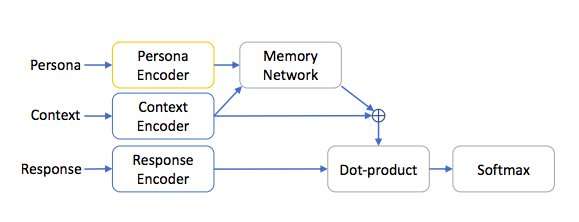
Researchers at Facebook have recently compiled a dataset of 5 million personas and 700 million persona-based dialogues. This database could be used to train end-to-end dialogue systems, resulting in more engaging and rich dialogues between computer agents and humans.
Computer Sciences
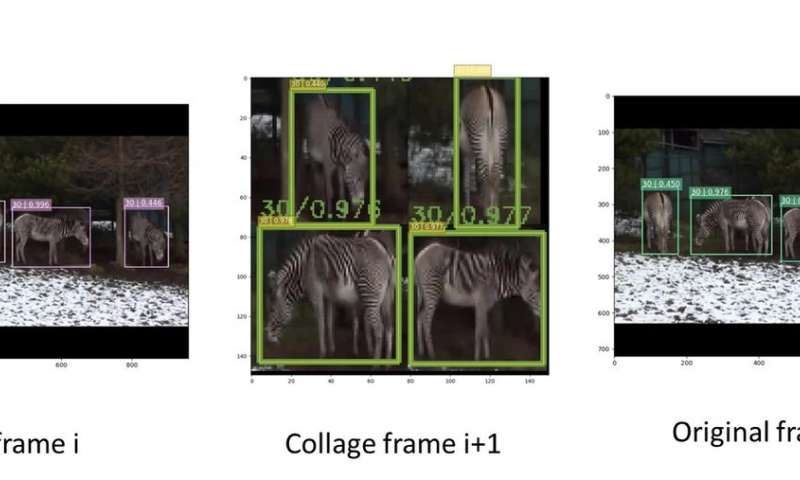
Fast object detection in videos using region-of-interest packing
Researchers at the Robert Bosch Center for Data Science and Artificial Intelligence and Center for Computational Brain Research, Indian Institute of Technology Madras, and Purdue University have recently developed a new method of reducing computational requirements...
Developing brain atlas using deep learning algorithms
A team of researchers from the Brain Research Institute of the University of Zurich and the Swiss Federal Institute of Technology (ETH) have developed a fully automated brain registration method that could be used to segment brain regions of interest in mice.
Can a computer write a sonnet as well as Shakespeare?
AI or not AI: that is the question.
ColorUNet: A new deep CNN classification approach to colorization
A team of researchers at Stanford University has recently developed a CNN classification method to colorize grayscale images. The tool they devised, called ColorUNet, draws inspiration from U-Net, a fully convolutional network for image segmentation.

AI systems shed light on root cause of religious conflict
Artificial intelligence can help us to better understand the causes of religious violence and to potentially control it, according to a new Oxford University collaboration. The study is one of the first to be published that uses psychologically realistic AI—as opposed...
An integrated visual and semantic neural network model explains human object recognition in the brain
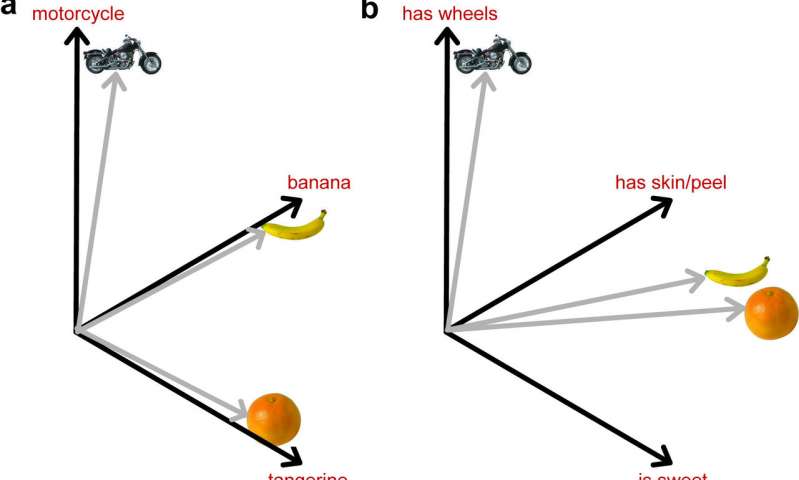
Neuroscience researchers at the University of Cambridge have combined computer vision with semantics, developing a new model that could help to better understand how objects are processed in the brain.
DeepMind researchers develop neural arithmetic logic units (NALU)
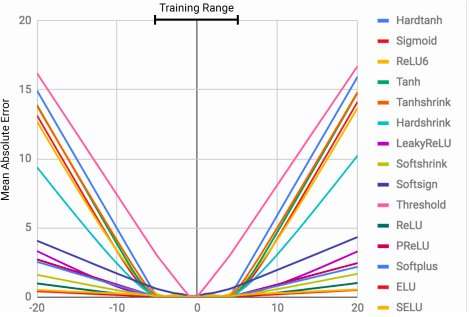
The ability to represent and manipulate numerical quantities can be observed in many species, including insects, mammals and humans. This suggests that basic quantitative reasoning is an important component of intelligence, which has several evolutionary advantages.
An evaluation of machine learning to identify bacteraemia in SIRS patients
A team of researchers at the Medical University of Vienna has recently evaluated the effectiveness of machine learning strategies to identify bacteraemia in patients affected by systemic inflammatory response syndrome (SIRS). Their study, published in Scientific...
A new approximate computing approach using CNNs
Researchers at Fukuoka University, in Japan, have recently proposed a design methodology for configurable approximate arithmetic circuits. As part of their study, published on ResearchGate, they applied their method to a prototype system for image processing that...