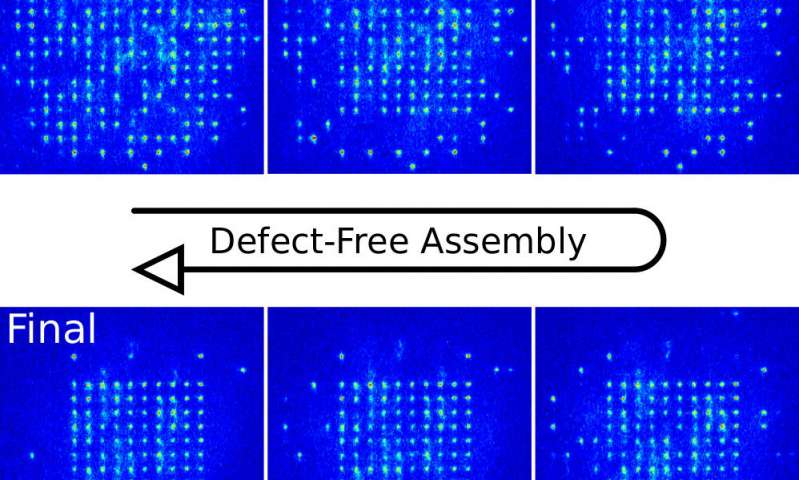
Researchers at Technische Universität Darmstadt have recently demonstrated the defect-free assembly of versatile target patterns of up to 111 single-atom quantum systems. Their findings, outlined in a paper published in Physical Review Letters, could drive...
PHYS.ORG
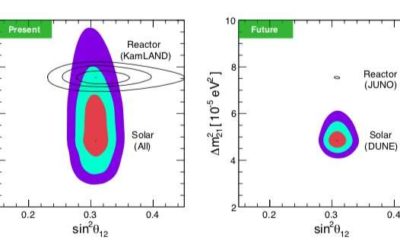
The DUNE experiment could lead to new discoveries about solar neutrinos
The Deep Underground Neutrino Experiment (DUNE) is an international research collaboration aimed at exploring topics related to neutrinos and proton decay, which should start collecting data around 2025. In a recent study featured in Physical Review Letters, a team of...
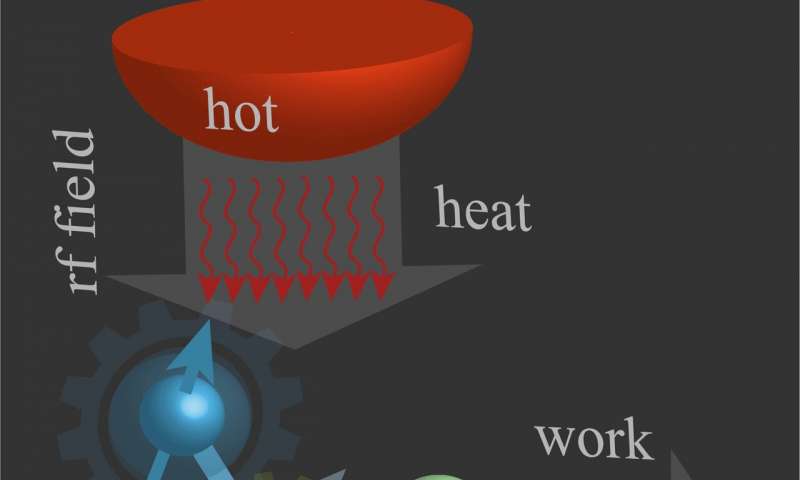
The experimental demonstration of a spin quantum heat engine
The theoretical notion of a 'quantum heat engine' has been around for several decades. It was first introduced around sixty years ago by Scovil and Schulz-DuBois, two physicists at Bell Labs who drew an analogy between three-level masers and thermal machines.
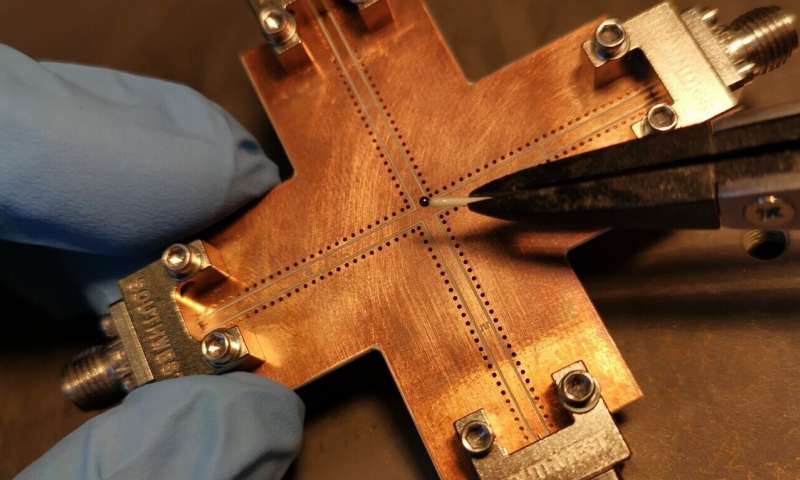
Producing dissipative coupling in hybrid quantum systems
Observing matter-wave diffraction from a periodic array of half planes
Researchers at Ulsan National Institute of Science and Technology (UNIST), in Korea, and Fritz-Haber-Institut der Max-Planck-Gesellschaft, in Germany, have recently conducted a study investigating matter-wave diffraction from a periodic array of half planes. Their...
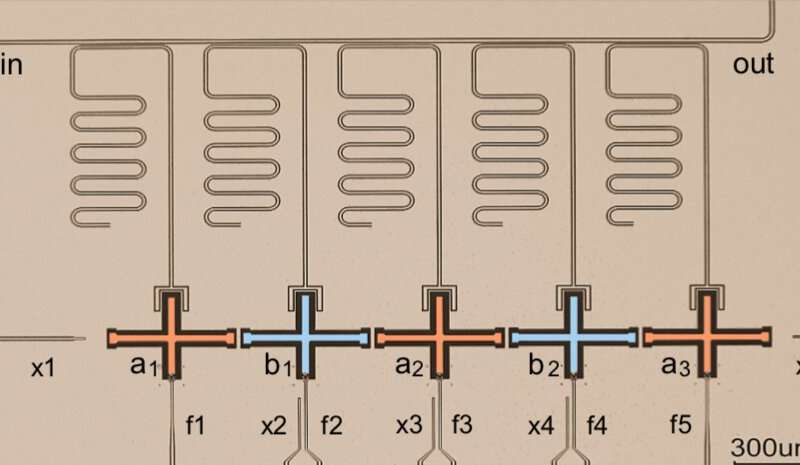
Observing topological magnon insulator states in a superconducting circuit
Topological states of matter are phases of matter that go beyond the Landau symmetry-breaking theory, which are characterized by topological invariants and topological edge states. Physicist David J. Thouless, in collaboration with F. Duncan, M. Haldane and J. Michael...
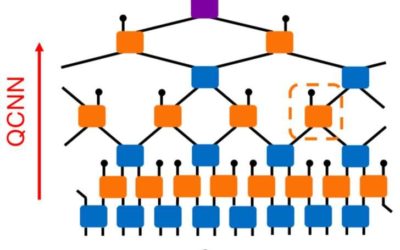
Introducing quantum convolutional neural networks
Machine learning techniques have so far proved to be very promising for the analysis of data in several fields, with many potential applications. However, researchers have found that applying these methods to quantum physics problems is far more challenging due to the...
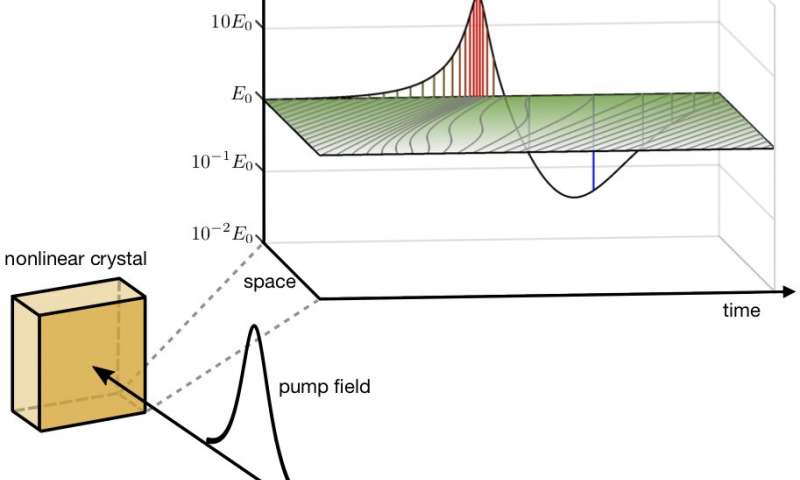
Measuring light and vacuum fluctuations from a time flow perspective
Some of the greatest unanswered questions about the nature of the universe are related to light, the vacuum (i.e. space where neither matter nor radiation exists), and their relationship with time. In the past, physicists and philosophers have addressed a variety of...
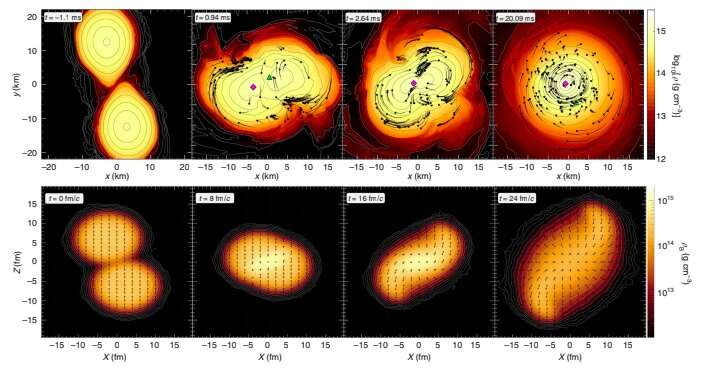
Measuring temperatures similar to those occurring in star collisions in the lab
Collisions between neutron stars are fascinating cosmic events that lead to the formation of numerous chemical elements. Temperatures during these collisions are exponentially high, typically reaching up to hundreds of billions of degrees Celsius.
Molecular hydrogen becomes semimetallic at pressures above 350 GPa
According to condensed matter physics predictions, at a high enough pressure, hydrogen should dissociate and transform into an atomic metal. However, the exact pressure range at which this occurs has not yet been ascertained, and the process through which hydrogen...