Researchers at ETH Zürich and the University of Bologna have recently created PULP Dronet, a 27-gram nano-size unmanned aerial vehicle (UAV) with a deep learning-based visual navigation engine. Their mini-drone, presented in a paper pre-published on arXiv, can run...
TECHXPLORE
PuzzleFlex: Computing the kinematic motion of systems with loose joints
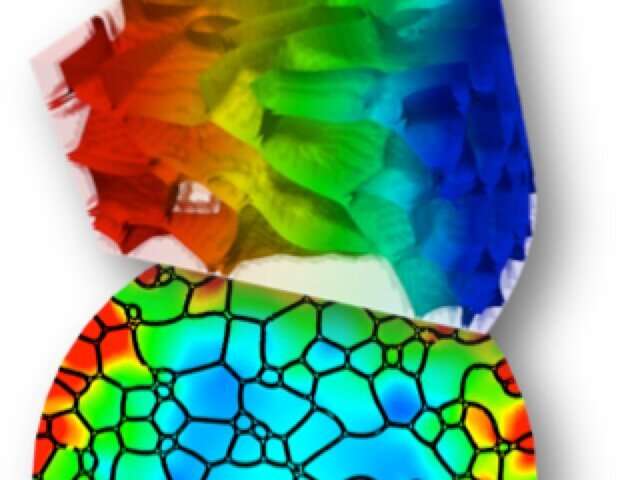
Small motions between individual parts in jigsaw puzzles, LEGO buildings, human backbones and systems of connectable modular robots can allow flexing of their entire structures. A team of researchers at Dartmouth College has recently carried out a study exploring the...
K-Athena: a performance portable magnetohydrodynamics code
Running large-scale simulations is a crucial aspect of modern scientific research, yet it often requires a vast amount of computational resources. As we approach the era of exascale computing, which will be marked by the introduction of highly performing...
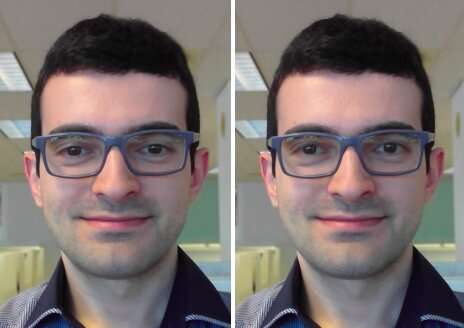
LeRop: A deep learning-based model to automatically capture human portraits
Taking good-quality photographs can be a challenging task, as it typically requires finding ideal locations, angles and lighting conditions. Although artistic pictures have so far primarily been taken by human photographers, in recent years, some researchers have...
Maestro: a new attack that orchestrates malicious flows with BGP
Researchers at the University of Tennessee have recently identified the Maestro attack, a new link flooding attack (LFA) that leverages plane traffic control engineering techniques to concentrate botnet-sourced distributed denial of service (DDos) flows on transit...
MobiKa: A low-cost mobile robot that can assist people in a variety of settings
Researchers at Fraunhofer IPA, in Stuttgart, Germany, have recently developed MobiKa, a low-cost, mobile robot capable of two-modal (voice and text) interactions with humans. Their robot, presented in a paper pre-published on arXiv, could be particularly useful for...
Monitoring human physiological responses to improve interactions with robots
Researchers from the Century Mold Collaborative Robotics Laboratory (CMCRL) at Rochester Institute of Technology (RIT) in New York have recently developed a new framework for monitoring human physiological responses while users are collaborating with a robot to...
MOOSE: A platform to create complex multiphysics simulations
In recent decades, technological advances have opened up exciting new possibilities for research in a variety of fields, including physics. Nonetheless, creating sophisticated simulations to represent or address multiphysics problems using computing resources can...
New designs for jumping and wing-flapping microrobots
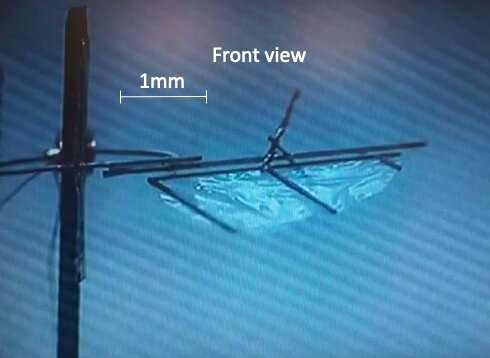
Researchers at the University of California (UC) Berkeley have recently designed two insect-scale microbots, one that jumps and another that flaps its artificial wings. These robot designs, presented in two papers pre-published on arXiv, mimic real biological...
New exploitation techniques and defenses for DOP attacks
Data-oriented attacks allow hackers to manipulate non-control data and alter a program's behavior, often causing significant damage to the systems affected. Researchers at Virginia Tech, Clemson University, Pennsylvania State University and Aalto University have...