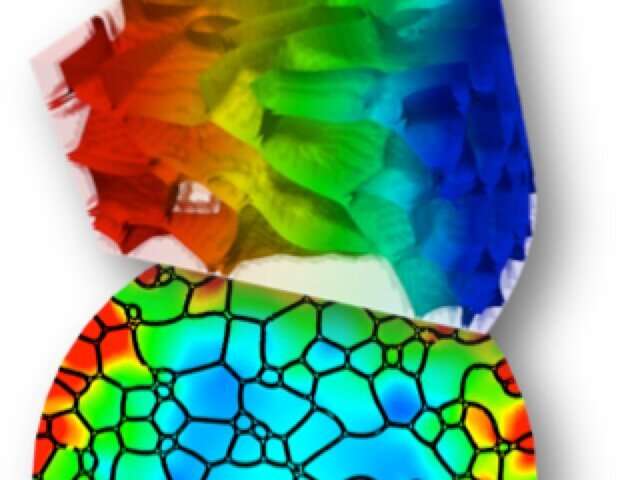
In recent decades, technological advances have opened up exciting new possibilities for research in a variety of fields, including physics. Nonetheless, creating sophisticated simulations to represent or address multiphysics problems using computing resources can...
TECHXPLORE
New designs for jumping and wing-flapping microrobots
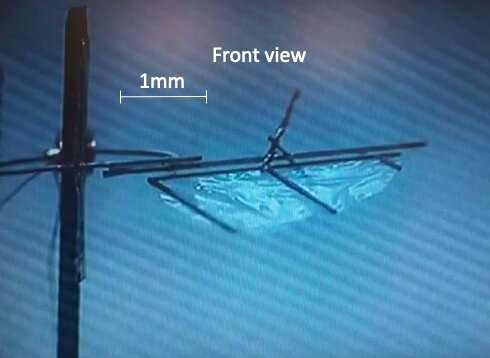
Researchers at the University of California (UC) Berkeley have recently designed two insect-scale microbots, one that jumps and another that flaps its artificial wings. These robot designs, presented in two papers pre-published on arXiv, mimic real biological...
New exploitation techniques and defenses for DOP attacks
Data-oriented attacks allow hackers to manipulate non-control data and alter a program's behavior, often causing significant damage to the systems affected. Researchers at Virginia Tech, Clemson University, Pennsylvania State University and Aalto University have...
New models for handwriting recognition in online Latin and Arabic scripts
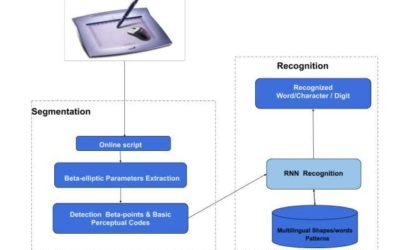
Researchers at the University of Sfax, in Tunisia, have recently developed a new method to recognize handwritten characters and symbols in online scripts. Their technique, presented in a paper pre-published on arXiv, has already achieved remarkable performance on...
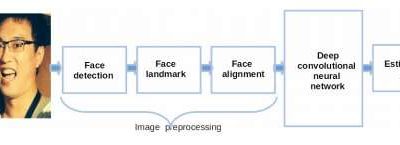
Estimating people’s age using convolutional neural networks
Over the past few years, researchers have created a growing number of machine learning (ML)-based face recognition techniques, which could have numerous interesting applications, for instance, enhancing surveillance monitoring, security control, and potentially even...
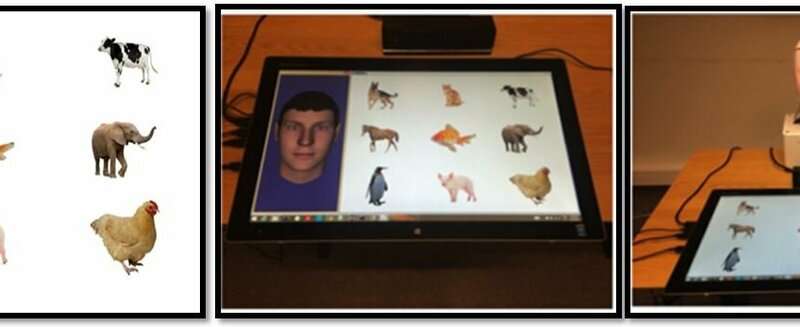
Evaluating robots as teachers or partners in language learning exercises
Researchers at the Royal Institute of Technology (KTH) in Sweden have carried out a study exploring the effects of using physical robots to assist humans during vocabulary learning exercises. The department of Speech, Music and Hearing at KTH specializes in...
ExAG: An image-guessing game to evaluate the helpfulness of machine explanations
In recent years, researchers have been trying to make artificial intelligence (AI) more transparent by developing algorithms that can explain their actions and behavior, as this could encourage greater trust in machines and enhance human-AI interactions. Despite their...
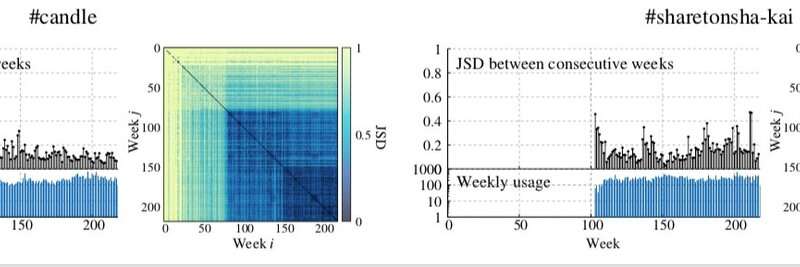
Exploring open-ended evolution in web services
Just like living ecosystems, web services form a complex artificial system consisting of tags and the user-generated media associated with them, such as photographs, movies and web pages. When drawing an analogy between biological and artificial ecosystems, tags could...
Flexible organic electrodes built using water-processed silver nanowires
Organic electronic devices, which are made of small molecules or polymers (i.e., substances composed primarily or completely of similar units bound together) are known to have several advantageous properties. In fact, organic electronics have relatively low production...
Flexoskeleton printing: Fabricating flexible exoskeletons for insect-inspired robots
Insects typically have a variety of complex exoskeleton structures, which support them in their movements and everyday activities. Fabricating artificial exoskeletons for insect-inspired robots that match the complexity of these naturally-occurring structures is a key...