Many existing techniques for developing quantum and neuromorphic computing tools are based on the use of superconductors, substances that become superconducting at low temperatures. In the same architectures, semiconductors, substances with a partial conductivity, are...
TECHXPLORE
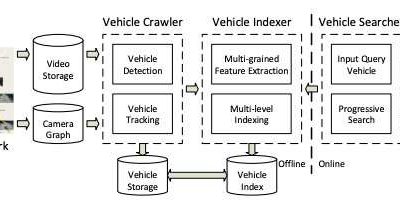
A new vehicle search system for video surveillance networks
A team of researchers at JD AI Research and Beijing University have recently developed a progressive vehicle search system for video surveillance networks, called PVSS. Their system, presented in a paper pre-published on arXiv, can effectively search for a specific...
A new water-splitting technique to generate clean hydrogen
Electrolytic hydrogen production entails the generation of hydrogen from water using electrical power, which should ideally come from renewable power sources such as sunlight and wind. Although this method of producing hydrogen could be a very promising solution for...
An IKEA furniture assembly environment to train robots on complex manipulation tasks
In order to complete complex everyday tasks such as using equipment, cooking or building furniture, robots should be able to plan their actions and manipulate objects in their surroundings. So far, however, teaching robots to complete complicated tasks, such as those...
An interactive drone to assist humans in office environments
Researchers at Karlsruhe Institute of Technology in Germany have recently developed an interactive drone designed to assist humans in indoor environments such offices or laboratories. In a paper prepublished on arXiv, the researchers presented the results achieved by...
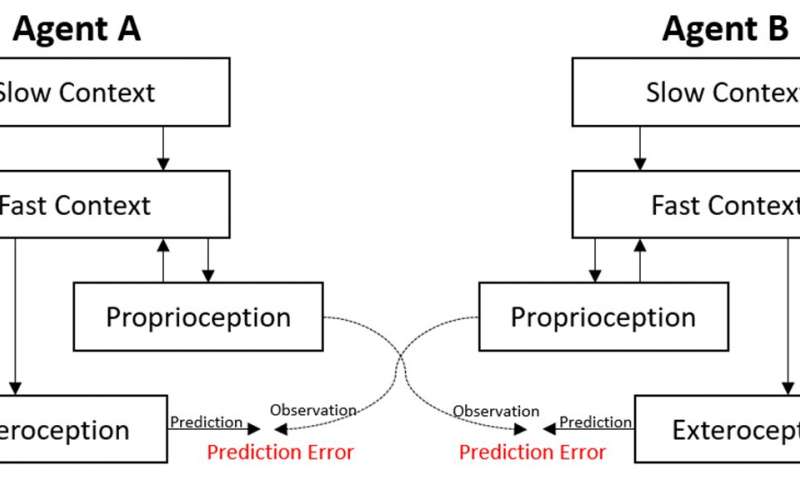
An interpretable model to predict the sequential motions of interacting agents
Researchers at the University of California (UC), Berkeley, have recently developed a generative model that can predict the sequential motions of pairs of interacting agents, including self-driving vehicles as well as vehicles with human drivers. Their method,...
A new approach for steganography among machine learning agents
Researchers at the University of Wisconsin-Madison and Amherst College have recently introduced a new form of steganography in the domain of machine learning called "training set camouflage." Their framework, outlined in a paper pre-published on arXiv, allows a...
A new deep learning model for EEG-based emotion recognition
Recent advances in machine learning have enabled the development of techniques to detect and recognize human emotions. Some of these techniques work by analyzing electroencephalography (EEG) signals, which are essentially recordings of the electrical activity of the...
A new genetic algorithm for traffic control optimization
Researchers at the University of Technology Sydney and DATA61 have recently developed a new method for optimizing the timing of signals in urban environments under severe traffic conditions. Their approach, presented in a paper pre-published on arXiv, entails the use...
A new memristor-based neural network inspired by the notion of associative memory
Classical conditioning is a psychological process through which animals or humans pair desired or unpleasant stimuli (e.g., food or a painful experiences) with a seemingly neutral stimulus (e.g., the sound of a bell, the flash of a light, etc.) after these two stimuli...