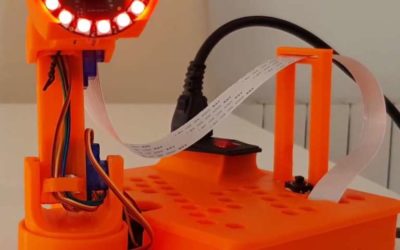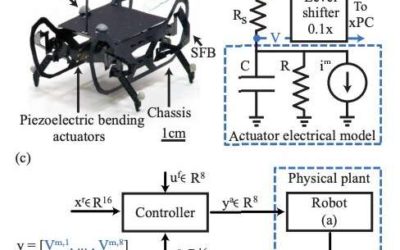
Researchers at Kanazawa University have recently developed a friction reduction system based on a lubricating effect, which could have interesting soft robotics applications. Their system, presented in a paper published in Taylor & Francis' Advanced Robotics journal,...
TECHXPLORE
A generative memory approach to enable lifelong reinforcement learning
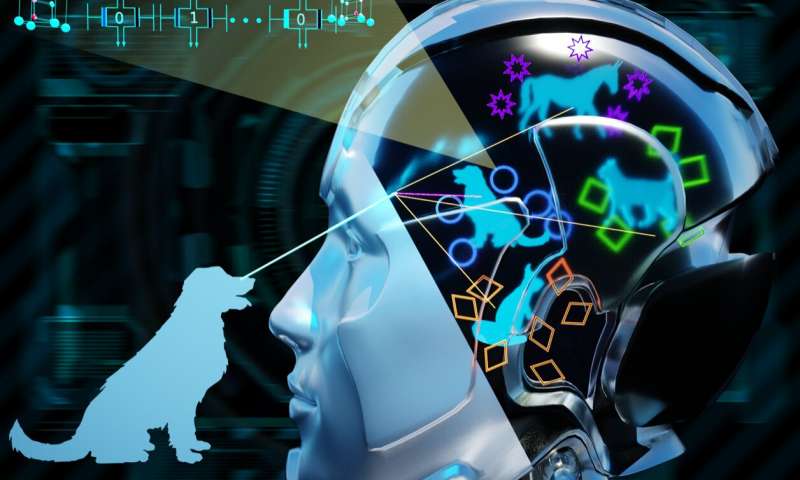
A key limitation of existing artificial intelligence (AI) systems is that they are unable to tackle tasks for which they have not been trained. In fact, even when they are retrained, the majority these systems are prone to 'catastrophic forgetting,' which essentially...
A two-view network to predict depth and ego motion from monocular sequences
Researchers from the Embedded Systems and Robotics group at TCS Research & Innovation have recently developed a two-view depth network to infer depth and ego-motion from consecutive monocular sequences. Their approach, presented in a paper pre-published on arXiv, also...
A bio-inspired approach to enhance learning in ANNs
The human brain continuously changes over time, forming new synaptic connections based on experiences and information learned over a lifetime. Over the past few years, artificial Intelligence (AI) researchers have been trying to reproduce this fascinating capability,...
A bite acquisition framework for robot-assisted feeding systems
According to a survey released by the U.S. Census Bureau, around 12.3 million Americans require assistance with activities of daily living (ADLs) or instrumental activities of daily living (IADLs), one of which is feeding. Robots could be of great help to people...
A CNN-based method for math formula script and type identification
Researchers at the University of Tunis have recently proposed a new system for math formula script and type identification, which is based on convolutional neural networks (CNNs). Their method, presented in a paper published by Springer, can automatically discriminate...
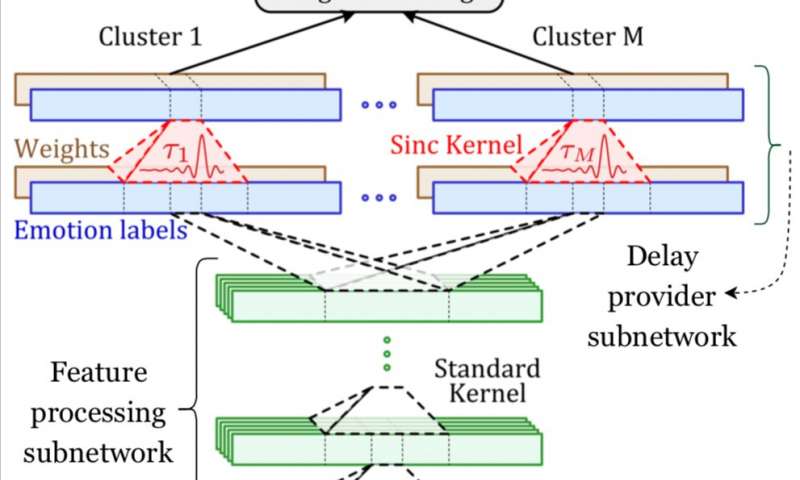
A convolutional network to align and predict emotion annotations
Machine learning models that can recognize and predict human emotions have become increasingly popular over the past few years. In order for most of these techniques to perform well, however, the data used to train them is first annotated by human subjects. Moreover,...
Addressing the obstacles preventing the commercialization of lithium-rich layered sulfides
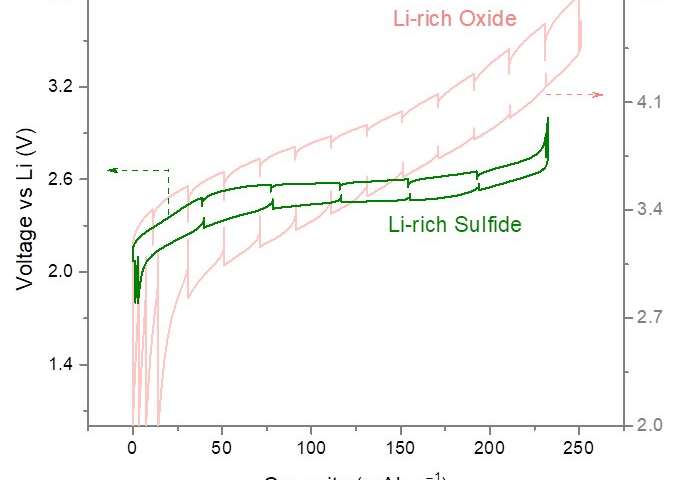
Anionic redox chemistry is a fairly new research area that could pave the way for the development of more efficient lithium ion-battery cathode materials such as Li-rich layered oxides. So far, however, anionic redox chemistry approaches have been found to have...
A decentralized trajectory generation algorithm for multi-robot systems
Researchers at the SRM Institute of Science and Technology in India have recently developed a decentralized trajectory generation algorithm for multi-agent systems. Their algorithm, presented in a paper pre-published on arXiv, can generate collision-free trajectories...
A deep learning-based method to detect cyberbullying on Twitter
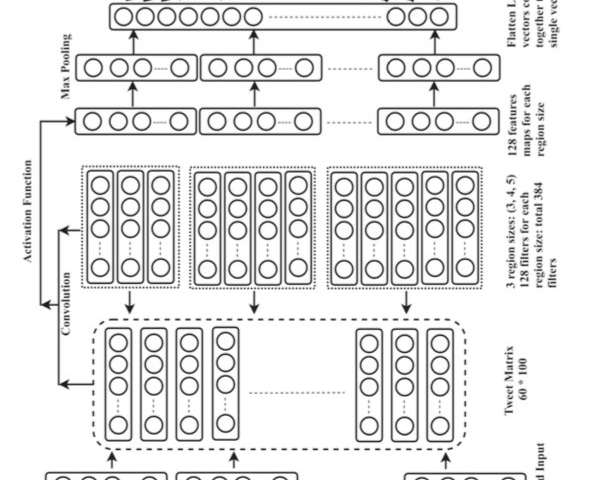
Researchers at King Saud University, in Saudi Arabia, have developed a new approach to detect cyberbullying on Twitter using deep learning called OCDD. In contrast with other deep-learning approaches, which extract features from tweets and feed them to a classifier,...