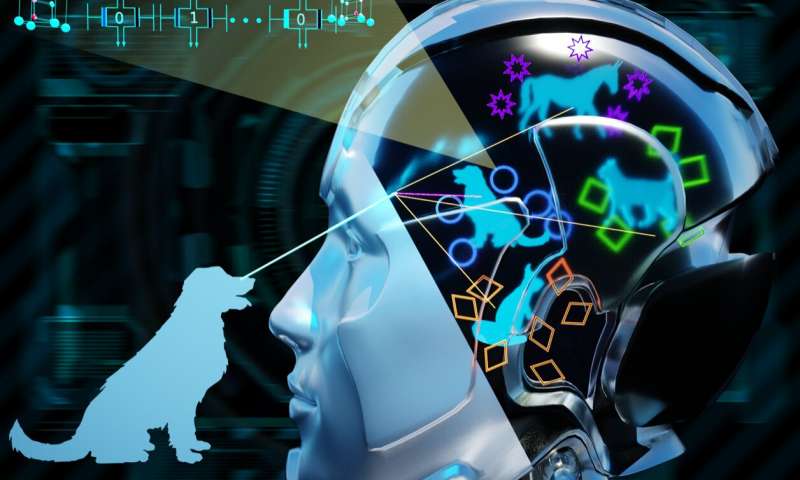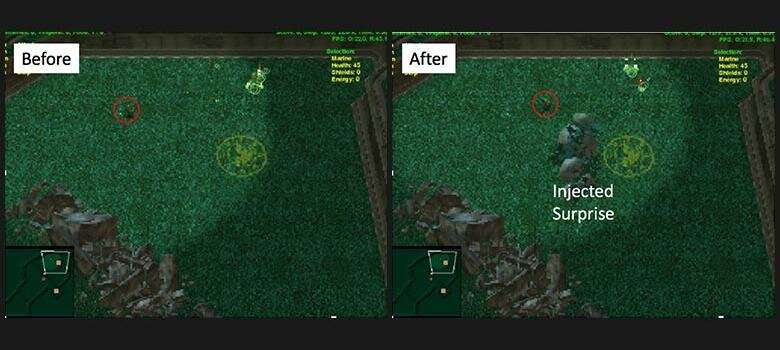
Researchers at SUNY Binghamton, Cleveland State University and the University of Washington have recently developed a new dialogue system that could improve human-robot interactions. This system, presented in a paper pre-published on arXiv, is designed to learn...

TECHXPLORE
A face-following robot arm with emotion detection
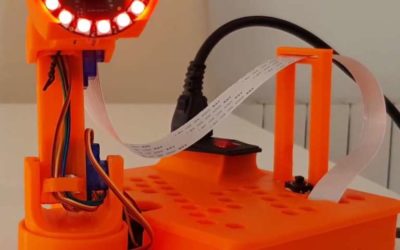
Researchers at Universitat Autònoma de Barcelona (UAB) have recently developed a face-following robotic arm with emotion detection inspired by Pixar Animation Studios' Luxo Jr. lamp. This robot was presented by Vernon Stanley Albayeros Duarte, a computer science...
A ferroelectric ternary content-addressable memory to enhance deep learning models
Most deep-learning algorithms perform well when trained on large sets of labeled data, but their performance tends to decline when processing new data. Researchers worldwide have thus been trying to develop techniques that could improve the ability of these algorithms...
A framework for AI-powered agile project management
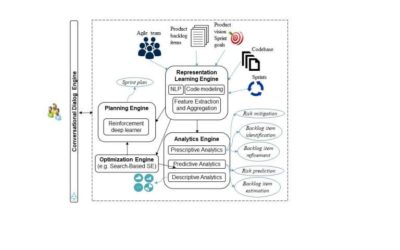
Researchers at the University of Wollongong, Deakin University, Monash University and Kyushu University have developed a framework that could be used to build a smart, AI-powered agile project management assistant. Their paper, pre-published on arXiv, has been...
A framework to estimate and control leg trajectories of a quadrupedal microrobot
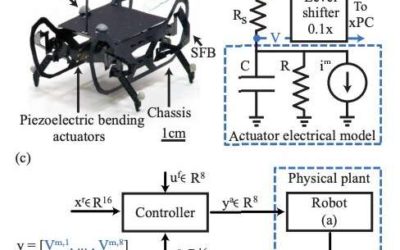
A team of researchers at Harvard University and Wyss Institute for Biologically Inspired Engineering has recently developed a computationally efficient framework for the estimation and control of leg trajectories on a quadrupedal microrobot. Their approach, outlined...
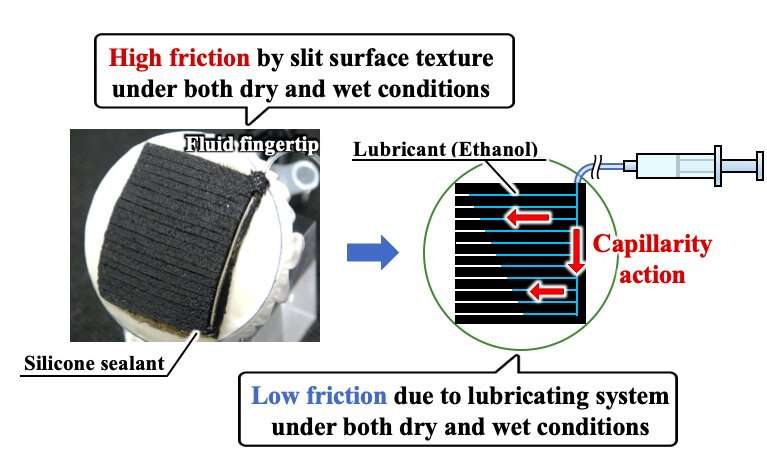
A friction reduction system for deformable robotic fingertips
Researchers at Kanazawa University have recently developed a friction reduction system based on a lubricating effect, which could have interesting soft robotics applications. Their system, presented in a paper published in Taylor & Francis' Advanced Robotics journal,...
A generative memory approach to enable lifelong reinforcement learning
A key limitation of existing artificial intelligence (AI) systems is that they are unable to tackle tasks for which they have not been trained. In fact, even when they are retrained, the majority these systems are prone to 'catastrophic forgetting,' which essentially...
A two-view network to predict depth and ego motion from monocular sequences
Researchers from the Embedded Systems and Robotics group at TCS Research & Innovation have recently developed a two-view depth network to infer depth and ego-motion from consecutive monocular sequences. Their approach, presented in a paper pre-published on arXiv, also...
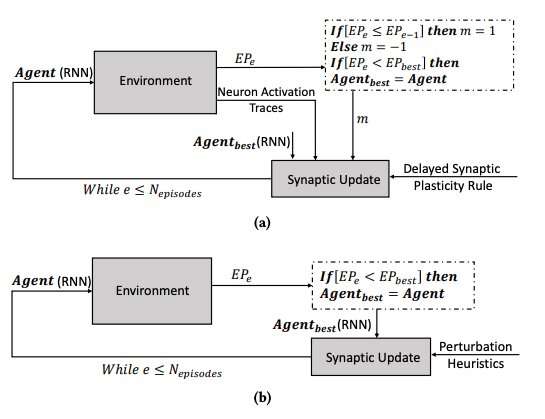
A bio-inspired approach to enhance learning in ANNs
The human brain continuously changes over time, forming new synaptic connections based on experiences and information learned over a lifetime. Over the past few years, artificial Intelligence (AI) researchers have been trying to reproduce this fascinating capability,...
A bite acquisition framework for robot-assisted feeding systems
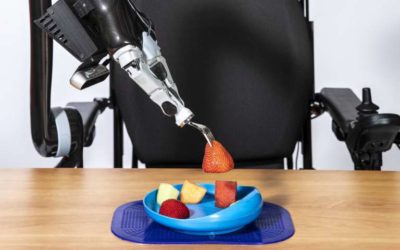
According to a survey released by the U.S. Census Bureau, around 12.3 million Americans require assistance with activities of daily living (ADLs) or instrumental activities of daily living (IADLs), one of which is feeding. Robots could be of great help to people...