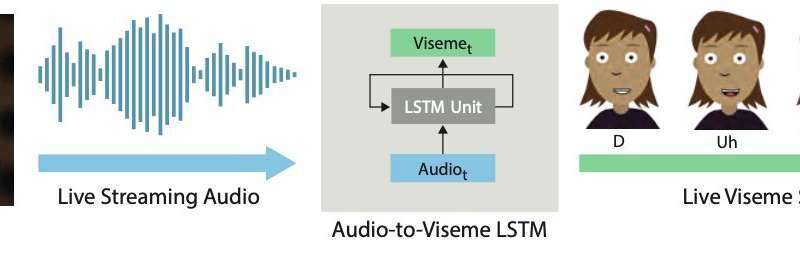
Live 2-D animation is a fairly new and powerful form of communication that allows human performers to control cartoon characters in real time while interacting and improvising with other actors or members of an audience. Recent examples include Stephen Colbert...
TECHXPLORE
A new method to enable robust locomotion in a quadruped robot
One of the key challenges for robotics research is the development of effective and resilient control systems, which allow robots to navigate a variety of environments and deal with unexpected events. Researchers at the University of Oslo have recently developed an...
Using machine learning to reconstruct deteriorated Van Gogh drawings
Researchers at TU Delft in the Netherlands have recently developed a convolutional neural network (CNN)-based model to reconstruct drawings that have deteriorated over time. In their study, published in Springer's Machine Vision and Applications, they specifically...
Autonomous visual inspection of large-scale infrastructures using micro aerial vehicles (MAVs)
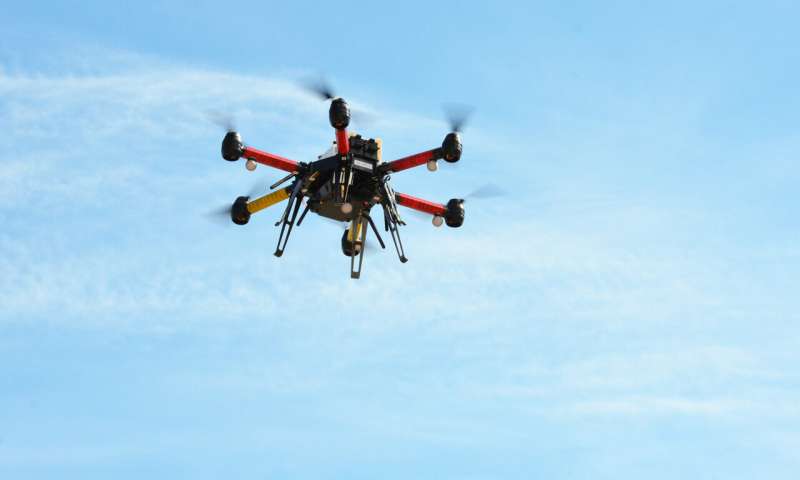
A team of researchers at Luleå University of Technology, in Sweden, has developed a new framework for performing visual inspections of large 3-D infrastructures using fully autonomous micro aerial vehicles (MAVs). In their paper, pre-published on arXiv, they introduce...
Researchers explore interactions between preschoolers and robotic partners
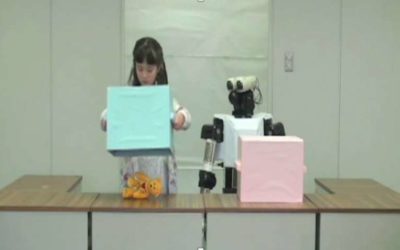
The relationship between humans and robots has become the focus of an increasing number of research studies, in light of the approaching integration of robots within a variety of fields, including professional and educational contexts. An international and...
Using deep learning to localize human eyes in images
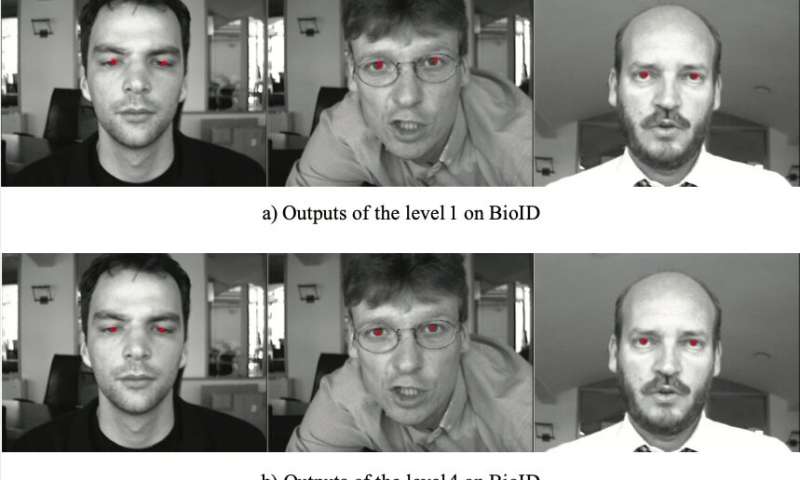
A team of researchers at China University of Geosciences and Wuhan WXYZ Technologies in China has recently proposed a new machine learning-based technique to locate people's eyes in images of their faces. This technique, presented in a paper published in Elsevier's...
A new approach for unsupervised paraphrasing without translation
In recent years, researchers have been trying to develop methods for automatic paraphrasing, which essentially entails the automated abstraction of semantic content from text. So far, approaches that rely on machine translation (MT) techniques have proved particularly...
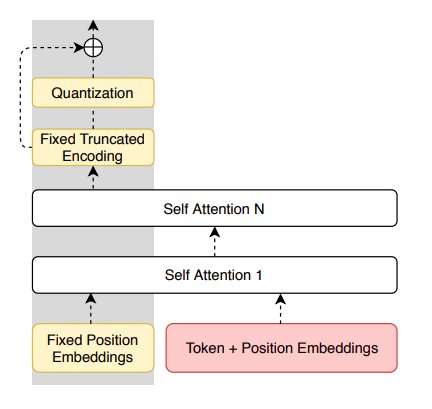
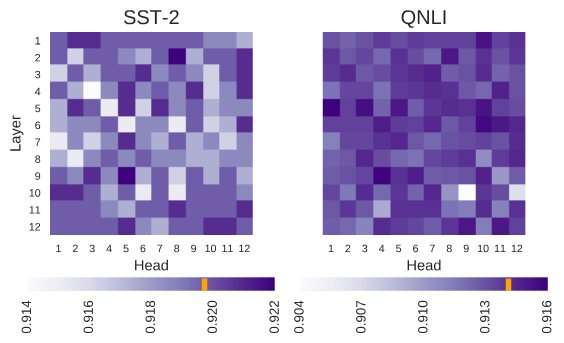
Investigating the self-attention mechanism behind BERT-based architectures
BERT, a transformer-based model characterized by a unique self-attention mechanism, has so far proved to be a valid alternative to recurrent neural networks (RNNs) in tackling natural language processing (NLP) tasks. Despite their advantages, so far, very few...
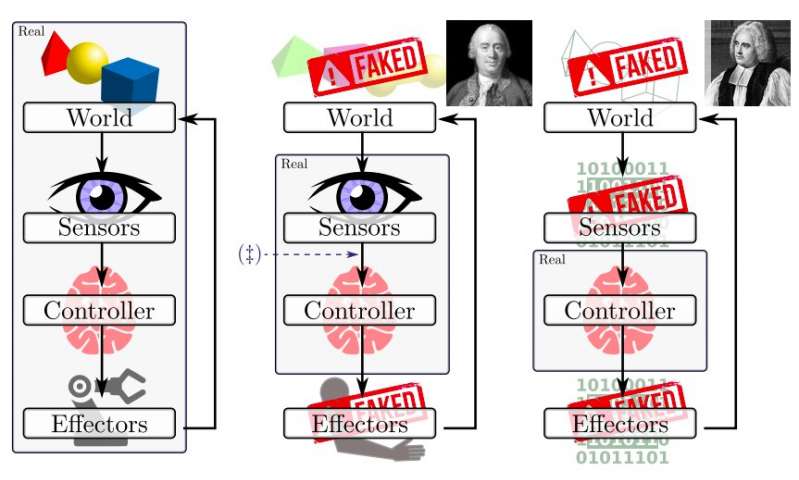
Investigating robot illusions and simulations of reality
To evaluate the performance of robotics algorithms and controllers, researchers typically use software simulations or real physical robots. While these may appear as two distinct evaluation strategies, there is a whole other range of possibilities that combine...
A new approach to enhance robot navigation in indoor environments
To effectively navigate their surroundings, robots typically plan paths based on pre-designed maps of the environment they are operating in and observations gathered by their sensors. While this type of navigation strategy can be useful in simple and static...