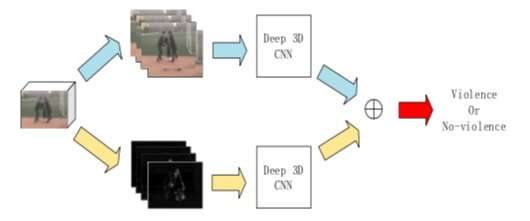
Researchers at China University of Petroleum (CUP), in Beijing, have recently developed a new method for multiplayer violence detection based on deep 3-D convolutional neural networks (CNNs). Their method was presented in a paper published in ICNCC 2018: Proceedings...
TECHXPLORE
A deep learning technique for context-aware emotion recognition
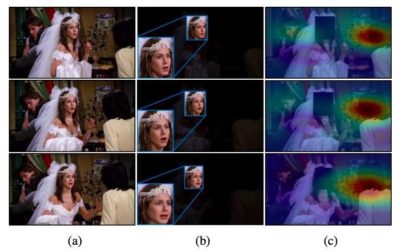
A team of researchers at Yonsei University and École Polytechnique Fédérale de Lausanne (EPFL) has recently developed a new technique that can recognize emotions by analyzing people's faces in images along with contextual features. They presented and outlined their...
A framework for depth estimation and relative localization in ground robots
Researchers at the University of Porto in Portugal and KTH Royal Institute of Technology in Sweden have recently developed a framework that can estimate the depth and relative pose of two ground robots that are collaborating on a given task. Their framework, outlined...
An evolutionary robotics approach for robot swarm cooperation
Recombination, the rearrangement of genetic materials as a result of mating or of combining segments of DNA from different organisms, has numerous evolutionary advantages. For instance, it allows organisms to remove deleterious mutations from their genomes and take on...
SLAP: Simultaneous Localization and Planning for autonomous robots
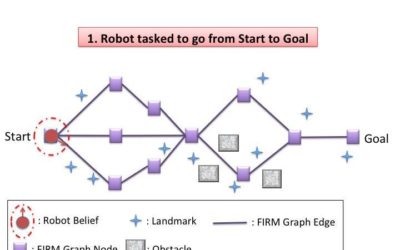
Researchers at NASA Jet Propulsion Laboratory (JPL), Texas A&M University, and Carnegie Mellon University recently carried out a research project aimed at enabling simultaneous localization and planning (SLAP) capabilities in autonomous robots. Their paper, published...
A new machine learning strategy that could enhance computer vision
Researchers from the Universitat Autonoma de Barcelona, Carnegie Mellon University and International Institute of Information Technology, Hyderabad, India, have developed a technique that could allow deep learning algorithms to learn the visual features of images in a...
Story ending generation using incremental encoding
Researchers at the AI Lab of Tsinghua University have recently developed an incremental encoder-based model that can generate story endings. An incremental encoder is a type of encoding compression algorithm that is often used to compress sorted data, such as lists of...
Improbotics: Bringing machine intelligence into improvised theatre
An unconventional company called HumanMachine has recently devised a unique theatre production called Improbotics, which involves both human performers and machines. This is the latest of a series of projects and initiatives that merge the world of theatre with...
Researchers use machine learning to analyse movie preferences
Could behavioural economics and machine learning help to better understand consumers' movie preferences? A team of researchers from the University of Cambridge, the University of West England, and the Alan Turing Institute dove deeper into this question, in a...
Modelling the loop between opinion formation and personalized recommendations
Researchers at the University of Twente and CNRS have recently carried out a study that explores the relationship between users' opinions and the personalized recommendations they receive online. In their paper, which was pre-published on arXiv, they proposed a model...