A team of researchers at Pyrofex Corporation recently introduced Casanova, a leaderless optimistic consensus algorithm suited for use in a blockchain. Rather than producing a chain, Casanova produces blocks in a directed acyclic graph (DAG), which is essentially a...
TECHXPLORE
ColorUNet: A new deep CNN classification approach to colorization
A team of researchers at Stanford University has recently developed a CNN classification method to colorize grayscale images. The tool they devised, called ColorUNet, draws inspiration from U-Net, a fully convolutional network for image segmentation.
AI systems shed light on root cause of religious conflict
Artificial intelligence can help us to better understand the causes of religious violence and to potentially control it, according to a new Oxford University collaboration. The study is one of the first to be published that uses psychologically realistic AI—as opposed...
An integrated visual and semantic neural network model explains human object recognition in the brain
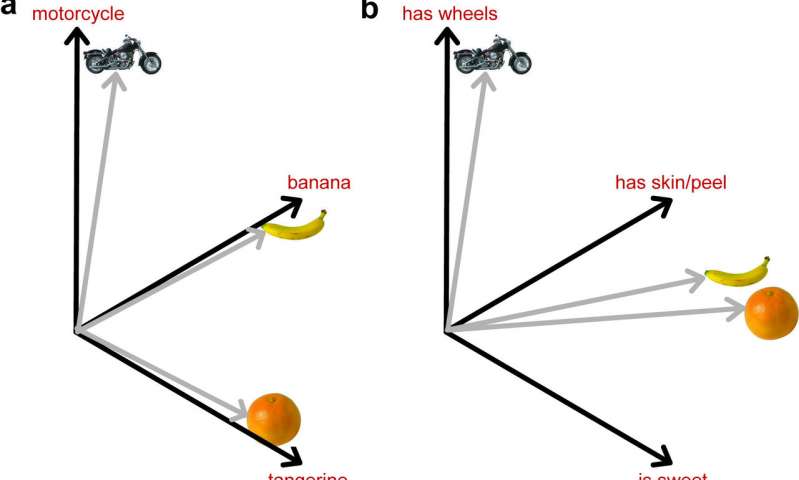
Neuroscience researchers at the University of Cambridge have combined computer vision with semantics, developing a new model that could help to better understand how objects are processed in the brain.
Using machine learning to detect software vulnerabilities
A team of researchers from R&D company Draper and Boston University developed a new large-scale vulnerability detection system using machine learning algorithms, which could help to discover software vulnerabilities faster and more efficiently.
A new molecular programming language: CRN++
Synthetic biology is a relatively new area of research that could significantly impact a number of fields, including biology, nanofabrication and medicine. A primary challenge in this emerging field is that of embedding computation in molecular contexts, in situations...
DeepMind researchers develop neural arithmetic logic units (NALU)
The ability to represent and manipulate numerical quantities can be observed in many species, including insects, mammals and humans. This suggests that basic quantitative reasoning is an important component of intelligence, which has several evolutionary advantages.
Defense against adversarial attacks using machine learning and cryptography
Researchers at the University of Geneva have recently developed a new defense mechanism that works by bridging machine learning with cryptography. The new system, outlined in a paper pre-published on arXiv, is based on Kerckhoffs' second cryptographic principle, which...
Droidbugs: A new benchmark to evaluate automated repair methods for Android apps
Automated program repair (APR) is an emerging field of research that sets out to develop methods of fixing software bugs automatically, without intervention by human programmers. After development, APR techniques are typically evaluated on several benchmarks,...
Emotion recognition based on paralinguistic information
Researchers at the University of Texas at Arlington have recently explored the use of machine learning for emotion recognition based solely on paralinguistic information. Paralinguistics are aspects of spoken communication that do not involve words, such as pitch,...