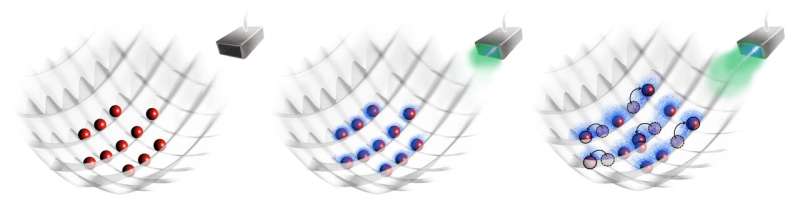
by Ingrid Fadelli | Jun 3, 2022 | General Physics, PHYS.ORG, Physics, Quantum Physics
Polaritons are quasiparticles that are formed when photons couple strongly with excitations of matter. These quasi-particles, which are half-light and half-matter, underpin the functioning of a wide range of emergent photonic quantum systems, including...

by Ingrid Fadelli | Jun 3, 2022 | Electronics & Semiconductors, TECHXPLORE
Quantum computers are promising computing machines that perform computations leveraging the collective properties of quantum physics states. These computers could help to tackle many computational problems that are currently intractable with conventional...
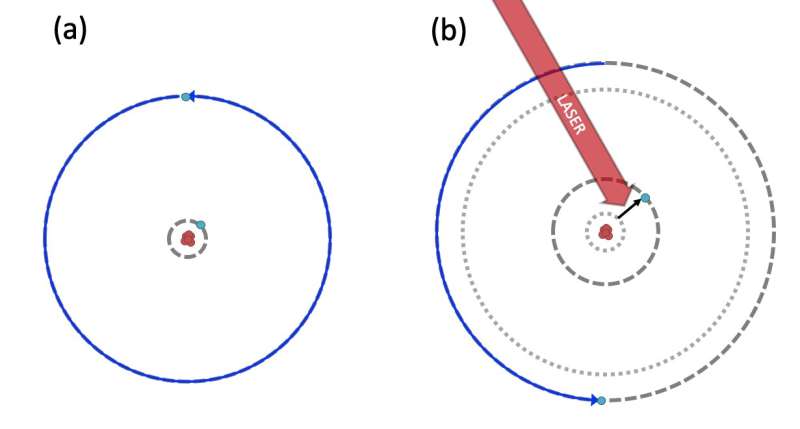
by Ingrid Fadelli | Jun 3, 2022 | Optics & Photonics, PHYS.ORG, Physics, Quantum Physics
Rydberg atoms are excited atoms that contain one or more electrons with a high principal quantum number. Due to their large size, long-range dipole-dipole interactions and strong coupling to external fields, these atoms have proved to be promising systems for the...
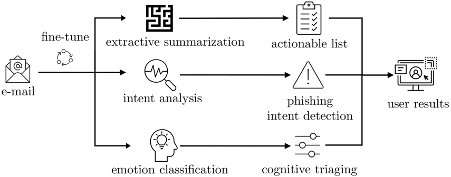
by Ingrid Fadelli | Jun 3, 2022 | Machine learning & AI, Security, TECHXPLORE
Phishing attacks are cyber-attacks through which criminals trick users into sending them money and sensitive information, or into installing malware on their computer, by sending them deceptive emails or messages. As these attacks have become increasingly widespread,...
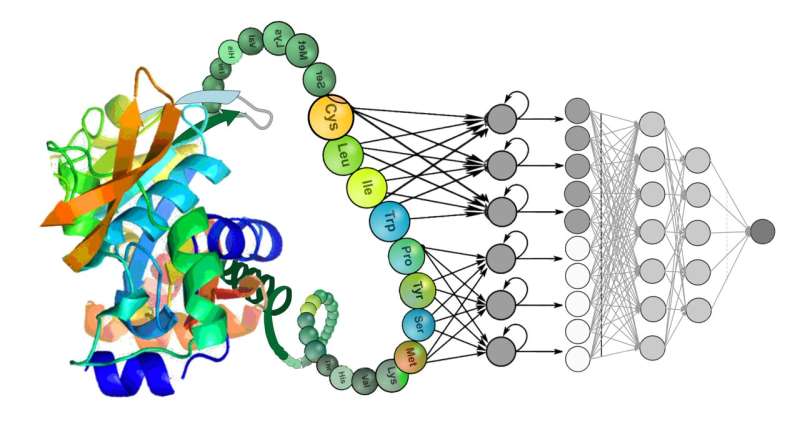
by Ingrid Fadelli | Jun 3, 2022 | Biology, Molecular & Computational biology, PHYS.ORG
Deep learning–based language models, such as BERT, T5, XLNet and GPT, are promising for analyzing speech and texts. In recent years, however, they have also been applied in the fields of biomedicine and biotechnology to study genetic codes and proteins.