
Work

Imaging nematic transitions in iron pnictide superconductors
Researchers at Stanford University have recently carried out an in-depth study of nematic transitions in iron pnictide superconductors. Their paper, published in Nature Physics, presents new imaging...
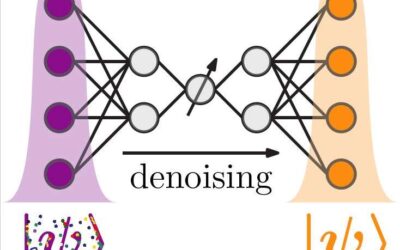
Quantum autoencoders to denoise quantum measurements
Many research groups worldwide are currently trying to develop instruments to collect high-precision measurements, such as atomic clocks or gravimeters. Some of these researchers have tried to...
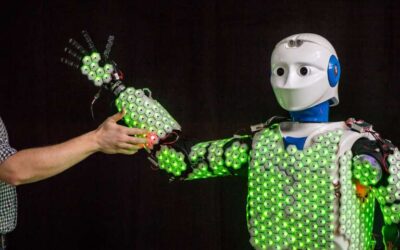
A highly performing and efficient e-skin for robotic applications
Researchers at Technische Universität München in Germany have recently developed an electronic skin that could help to reproduce the human sense of touch in robots. This e-skin, presented in a paper...
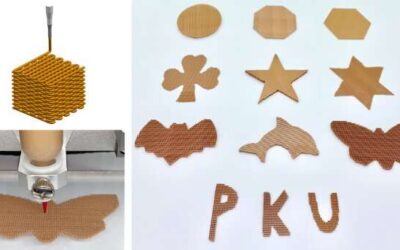
A new flexible piezoelectric composite for 3-D printing
Researchers at Peking University, Southern University of Science and Technology and the University of Jinan in China have recently designed a ceramic-polymer composite that can be used to print...
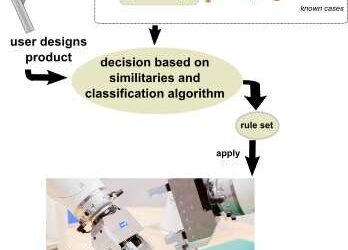
An algorithm to enhance the robotic assembly of customized products
Robots could soon assist humans in a variety of fields, including in manufacturing and industrial settings. A robotic system that can automatically assemble customized products may be particularly...
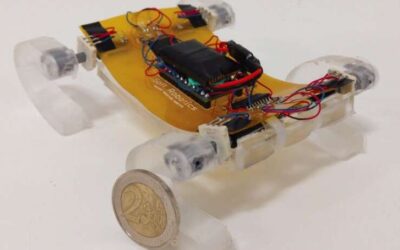
SQuad: A miniature robot that can walk and climb obstacles
Researchers at Bilkent University in Turkey have recently created a small quadruped robot called SQuad, which is made of soft structural materials. This unique robot, presented in a paper published...

Investigating the role of different neurons in artificial neural networks
Over the past decade or so, researchers worldwide have been developing increasingly advanced artificial neural networks (ANNs), computational methods designed to replicate biological mechanisms and...
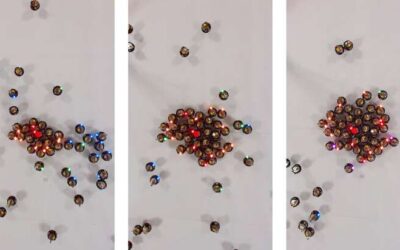
Bio-inspired algorithms to produce collaborative behaviors for robot teams
Researchers at the University of Surrey have recently developed self-organizing algorithms inspired by biological morphogenesis that can generate formations for multi-robot teams, adapting to the...
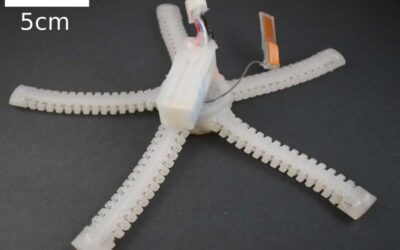
This is PATRICK: Meet the brittle star-inspired robot that can crawl underwater
Researchers at Carnegie Mellon University have recently created PATRICK, an untethered soft robot that artificially replicates the structure and behavior of the brittle star, a marine invertebrate...
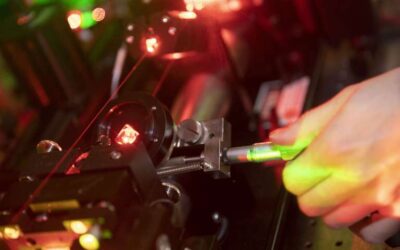
The realization of a 1-D magneto-optical trap of polyatomic molecules
Researchers at the Harvard-MIT Center for Ultracold Atoms have recently demonstrated a one-dimensional (1-D) magneto-optical trap (MOT) of polar free radical calcium monohydroxide (CaOH). This...