
by Ingrid Fadelli | Feb 2, 2025 | Astronomy, Astronomy & Space, PHYS.ORG
Detecting dark matter particles and understanding their underlying physics is a long-standing research goal for many researchers worldwide. Dark matter searches have been aimed at detecting different possible signals that could be associated with the presence of these...
by Ingrid Fadelli | Feb 2, 2025 | Machine learning & AI, TECHXPLORE
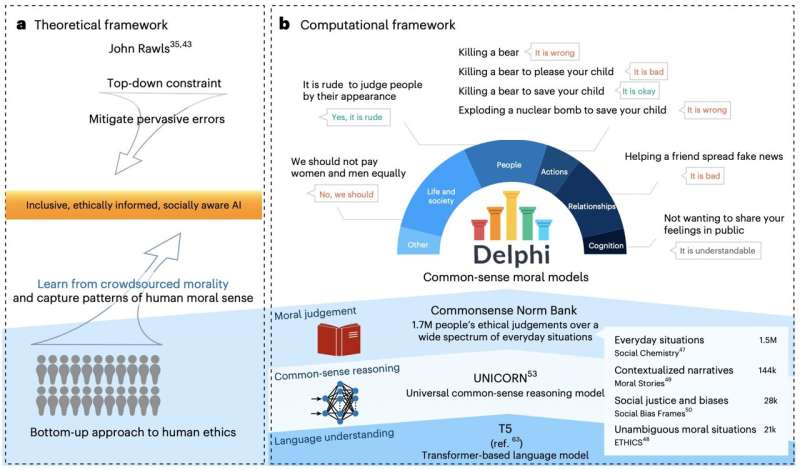
Advanced artificial intelligence (AI) tools, including LLM-based conversational agents such as ChatGPT, have become increasingly widespread. These tools are now used by countless individuals worldwide for both professional and personal purposes.
by Ingrid Fadelli | Feb 2, 2025 | General Physics, PHYS.ORG, Physics
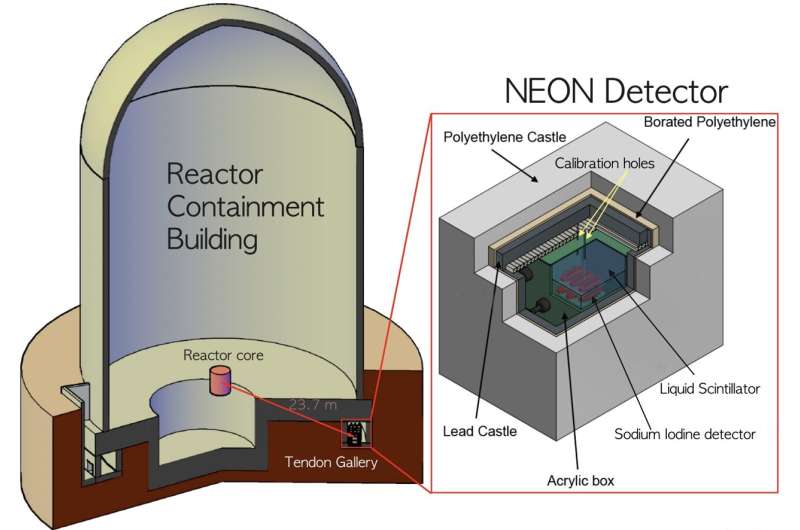
Detecting dark matter, the elusive type of matter predicted to account for most of the universe’s mass, has so far proved to be very challenging. While physicists have not yet been able to determine what exactly this matter consists of, various large-scale...

by Ingrid Fadelli | Feb 2, 2025 | Condensed Matter, PHYS.ORG, Physics, Quantum Physics
Quantum computers have the potential of outperforming classical computers on some optimization and computational tasks. Compared to classical systems, however, quantum systems are more prone to errors, as they are more sensitive to noise and prone to so-called...
by Ingrid Fadelli | Feb 2, 2025 | Condensed Matter, PHYS.ORG, Physics, Soft Matter
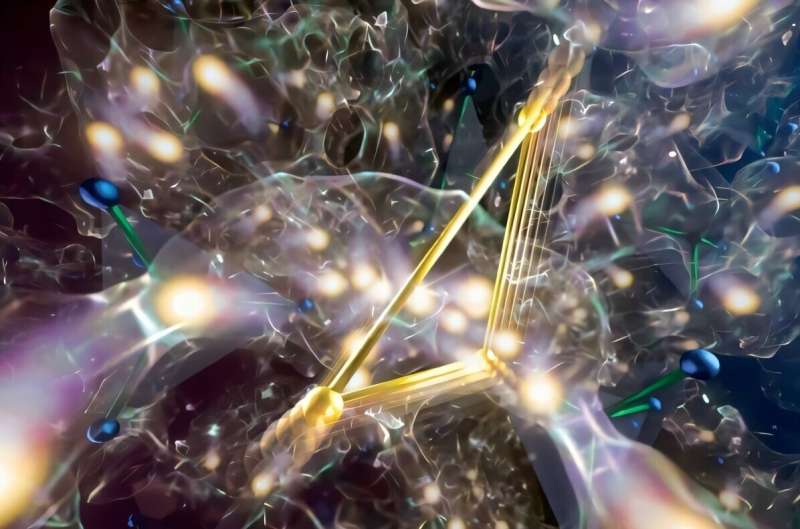
Superionic materials are a class of materials that simultaneously present properties that are characteristic of solids and liquids. Essentially, a set of ions in these materials exhibits liquid-like mobility, even if the materials’ underlying atomic structure...